
"Saint Anthony Industries"
5000 article(s) found

Introduction of Flavor Flavor Coffee beans in Coffee Variety producing area of Saint Roman Manor, Costa Rica
Costa Rica is located in the Central American isthmus, belonging to North America, 10 north latitude, 84 west longitude. It is bordered by the Caribbean Sea to the east and the North Pacific Ocean to the west, with a coastline of 1290 km (212km on the east coast and 1016 km on the west coast). Costa Rica borders Nicaragua in the north (309 km long border) and Panama (639 km long border) south-southeast. Total

Introduction to the characteristics of Coffee Flavor description in Saint Roman Manor, Costa Rica
The Communist Party of Costa Rica was founded in 1931 (renamed the people's Vanguard Party in 1943). The party led a general strike by banana plantation workers in 1934. From 1940 to 1948, R.A. Calderon Guardia and T. Deterred by the people's Democratic Movement, the two governments of Picardo adopted some democratic reform measures under the promotion of the people's Vanguard Party. In the 1948 general election, J.M.H, leader of the Social Democratic Party. Phenanthrene

Flavor description of Coffee beans in Saint Roman Manor, Costa Rica
Coffee was introduced into Costa Rica from Cuba in 1729. Today, its coffee industry is one of the well-organized industries in the world, with a yield of 1700 kg per hectare. Costa Rica has only 3.5 million people but 400m coffee trees, and coffee exports account for 25 per cent of the country's total exports. The volcanic soil of Costa Rica is very fertile and well drained, especially in the central part.

Introduction to fine coffee with mellow taste and flavor characteristics of Costa Rican Saint Roman Manor Coffee
From 1870 to 1882, T. Guardia Gutierrez exercised dictatorship, weakening the power of the two families. Since the 1970s, British and American capital has infiltrated. American entrepreneur M.C. Keith signed a contract with the Costa Rican government to build a railway from Port Limon to San Jose on the east coast, won a concession in 1999 and occupied large tracts of land to develop banana plantations. United Fruit of America in 1899

Rich flavor of Costa Rican Saint Roman Coffee Flavor Manor characteristics of boutique coffee
With fertile volcanic soil and good drainage, Dariga is the first country in Central America to grow coffee and bananas because of its commercial value. Coffee and bananas are the country's main exports. Coffee was introduced into Costa Rica from Cuba in 1729. Today, its coffee industry is one of the well-organized industries in the world, with a yield of 1700 kg per hectare. Gostad

Unique strong Coffee Grinding scale Flavor description method in Saint Roman Manor, Costa Rica
Coffee was introduced into Costa Rica from Cuba in 1729. Today, its coffee industry is one of the well-organized industries in the world, with a yield of 1700 kg per hectare. Costa Rica has only 3.5 million people but 400m coffee trees, and coffee exports account for 25 per cent of the country's total exports. The volcanic soil of Costa Rica is very fertile and well drained, especially in the central part.

Introduction of Coffee Flavor description, Grinding degree characteristics and Variety producing areas in Saint Roman Manor, Costa Rica
Coffee was introduced into Costa Rica from Cuba in 1729. Today, its coffee industry is one of the well-organized industries in the world, with a yield of 1700 kg per hectare. Costa Rica has only 3.5 million people but 400m coffee trees, and coffee exports account for 25 per cent of the country's total exports. The volcanic soil of Costa Rica is very fertile and well drained, especially in the central part.

Costa Rican Saint Roman Coffee Flavor Costa Rican Saint Roman Coffee
The coffee beans produced at the high latitudes of Costa Rica are famous in the world, full-bodied, mild in taste, but extremely sour. The coffee beans here have been carefully processed, which is why they have high quality coffee. Located in the south of SanJos, the capital of Tarasu, Costa Rica is one of the most valued coffee growers in the country. Tarazhu of Costa Rica (
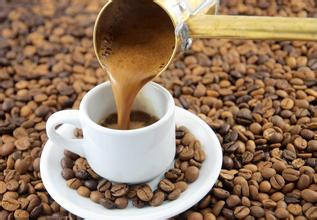
Introduction of Coffee Flavor description and Grinding degree characteristics of Coffee in Saint Roman Manor, Costa Rica with good sweetness
Coffee was introduced into Costa Rica from Cuba in 1729. Today, its coffee industry is one of the well-organized industries in the world, with a yield of 1700 kg per hectare. Costa Rica has only 3.5 million people but 400m coffee trees, and coffee exports account for 25 per cent of the country's total exports. The volcanic soil of Costa Rica is very fertile and well drained, especially in the central part.

Introduction to the characteristics of Flavor and Taste of Coffee Manor in Saint Roman, Costa Rica
Coffee was introduced into Costa Rica from Cuba in 1729. Today, its coffee industry is one of the well-organized industries in the world, with a yield of 1700 kg per hectare. Costa Rica has only 3.5 million people but 400m coffee trees, and coffee exports account for 25 per cent of the country's total exports. The volcanic soil of Costa Rica is very fertile and well drained, especially in the central part.

Introduction to the characteristics of Coffee Flavor varieties in Saint Roman Manor, Costa Rica
Coffee is an important economic source of Costa Rica. It was introduced in 1808 and has been cultivated for 200 years. Costa Rica has 1x3 population invested in newly developed villa sarchi, newly developed villa sarchi and coffee-related industries. Colombians say that coffee has changed the country and enjoyed a rich environment, and coffee has indeed made an outstanding contribution.

Introduction of Coffee Flavor and Taste characteristics of Saint Roman Manor in Costa Rica
From 1870 to 1882, T. Guardia Gutierrez exercised dictatorship, weakening the power of the two families. Since the 1970s, British and American capital has infiltrated. American entrepreneur M.C. Keith signed a contract with the Costa Rican government to build a railway from Port Limon to San Jose on the east coast, won a concession in 1999 and occupied large tracts of land to develop banana plantations. United Fruit of America in 1899

Trucks are also crazy Starbucks' first mobile truck coffee shop debuts.
Starbucks Starbucks opened a small new store in Colorado, USA. Starbucks's first mobile truck coffee shop unveiled Starbucks's first mobile mini coffee shop. The small storefront can also be loaded in a truck to move the storefront. The store is operated by Anthony Perez, senior conceptual designer of Starbucks, and Anthony Perez, senior conceptual designer of Starbucks.

Introduction to fine coffee with light and pure flavor and taste of Chateau Saint-Roman, Costa Rica
Tarrazu in Costa Rica is one of the major coffee producing areas in the world. The coffee produced is light and pure in flavor and pleasant in aroma. Costa Rica, with its fertile volcanic soil and good drainage, is the first country in Central America to grow coffee and bananas for commercial value. Coffee and bananas are the country's main exports. In 1729, coffee was introduced from Cuba to Goth.

An introduction to the coffee flavor and taste of Costa Rica's Saint Roman Manor with ideal acidity and unique strong flavor.
1502 C. Columbus discovered the coast of Costa Rica on his fourth voyage. Since then, the Spanish colonists have invaded many times. The city of Catago was founded in 1563 and Costa Rica was colonized by Spain and placed under the jurisdiction of the Governor's Office of Guatemala. During the colonial period, under the cruel enslavement and oppression of the Spanish colonists, the Indians were almost wiped out and there was little labor available for enslavement.

Costa Rican Saint Roman Coffee Flavor description introduction to the characteristics of High-quality Coffee beans in producing areas
The Communist Party of Costa Rica was founded in 1931 (renamed the people's Vanguard Party in 1943). The party led a general strike by banana plantation workers in 1934. From 1940 to 1948, R.A. Calderon Guardia and T. Deterred by the people's Democratic Movement, the two governments of Picardo adopted some democratic reform measures under the promotion of the people's Vanguard Party. In the 1948 general election, J.M.H, leader of the Social Democratic Party. Phenanthrene
Introduction to the taste of Costa Rican Saint Roman Manor Coffee with light and pure flavor and pleasant aroma
Tarrazu of Costa Rica is one of the major coffee producing areas in the world. Its flavor is light and pure, and its aroma is pleasant. Costa Rica, with its fertile volcanic soil and good drainage, is the first country in Central America to grow coffee and bananas for commercial value. Coffee and bananas are the country's main exports. In 1729, coffee came from

The delicious boutique coffee beans of Saint Roman, Costa Rica are planted in geographical location, climate and altitude.
Other kinds of Brazilian coffee, such as Rio and Parana, can be produced in large quantities because they do not need too much care. Although the taste is rough, it is a kind of good and cheap coffee. It has its own standard because it is distributed all over the country and its solid quality varies. It has its own standard (NO.2~NO.8 according to the number of sundries, NO.13~NO.19 according to the size of beans, and six grades according to taste).

Introduction to fine coffee with mellow taste and flavor characteristics of Costa Rican Saint Roman Manor Coffee
From 1870 to 1882, T. Guardia Gutierrez exercised dictatorship, weakening the power of the two families. Since the 1970s, British and American capital has infiltrated. American entrepreneur M.C. Keith signed a contract with the Costa Rican government to build a railway from Port Limon to San Jose on the east coast, won a concession in 1999 and occupied large tracts of land to develop banana plantations in 1855-1857, Molapo.

Introduction to the flavor and taste of boutique coffee beans in the coffee variety producing area of Saint Roman Manor, Costa Rica
Other kinds of Brazilian coffee, such as Rio and Parana, can be produced in large quantities because they do not need too much care. Although the taste is rough, it is a kind of good and cheap coffee. It has its own standard because it is distributed all over the country and its solid quality varies. It has its own standard (NO.2~NO.8 according to the number of sundries, NO.13~NO.19 according to the size of beans, and six grades according to taste).